Why visit Kinderdijk
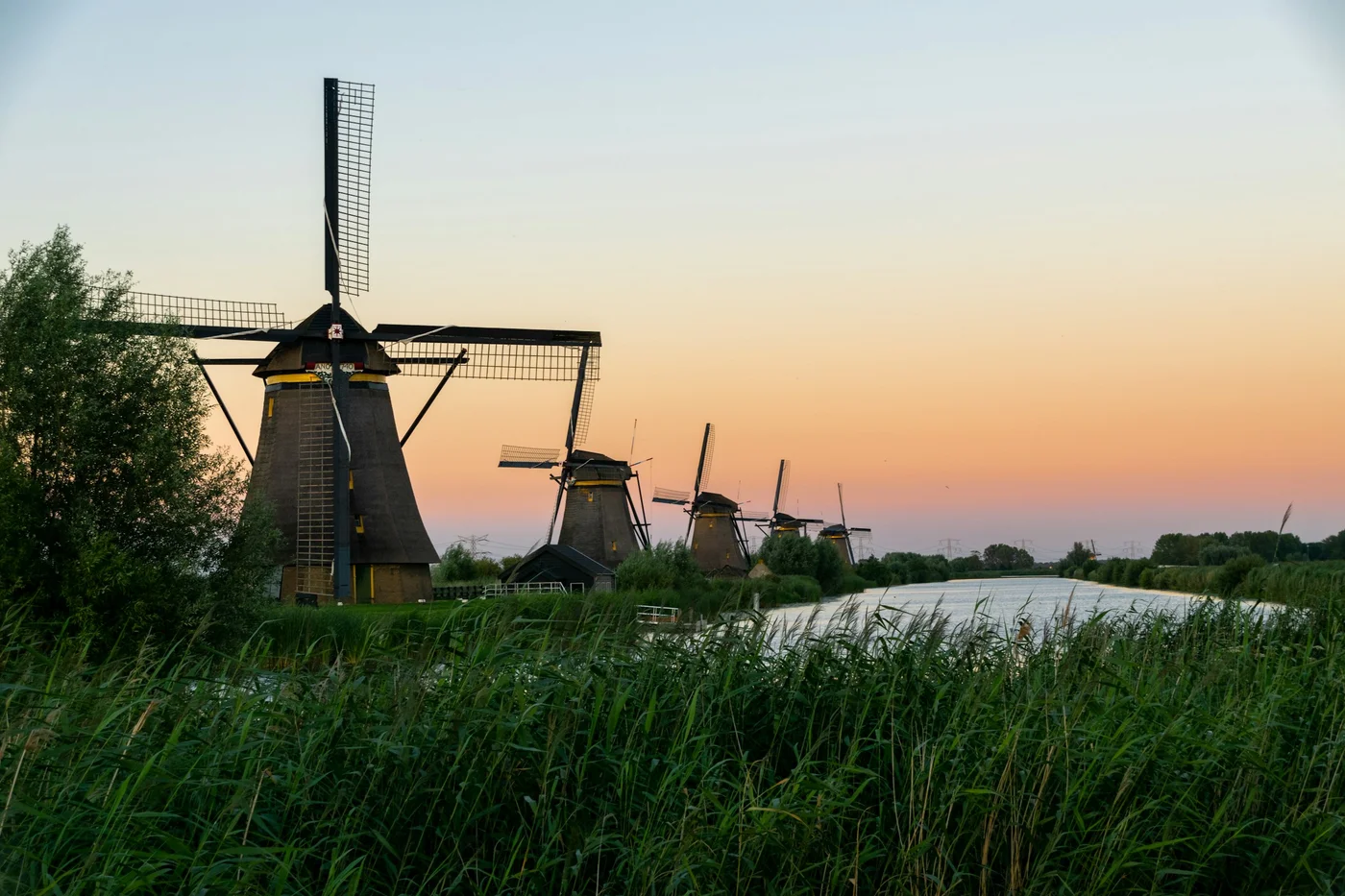
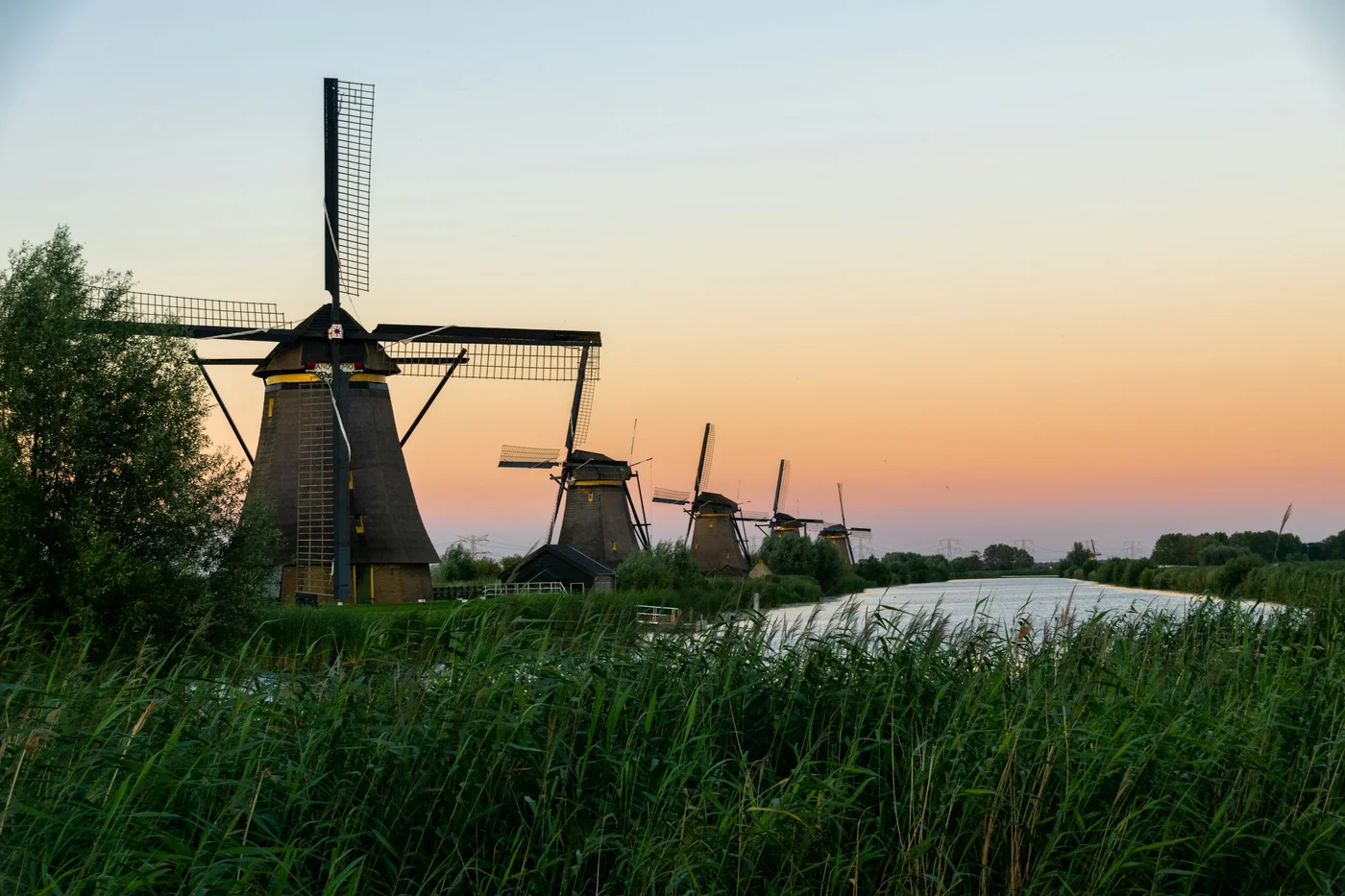
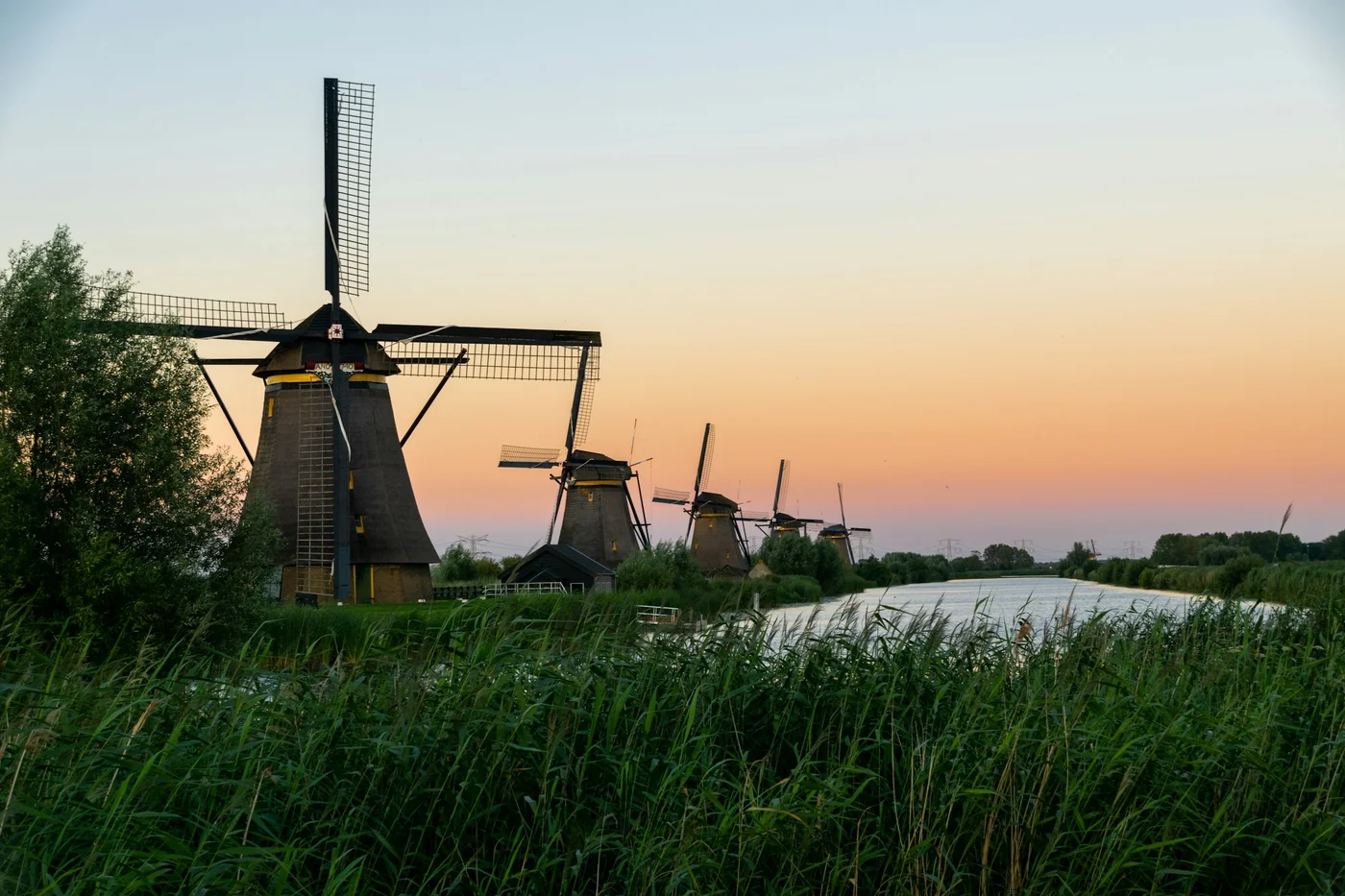
Kinderdijk is the most photographed Dutch windmill scene in the world — a 3km strip of polder landscape between two dykes where 19 surviving 18th-century windmills (mostly built between 1738 and 1740) still stand in a line, pumping water from the polders below sea level. The windmills were built to drain the Alblasserwaard polder, a feat of pre-industrial engineering that made this farmland habitable and is a defining example of the Dutch genius with water management; UNESCO World Heritage-listed in 1997. Two of the windmills (the Nederwaard No. 2 and the Blokweer) are open as museums — you climb the steep ladder-stairs to the upper levels and see how millers' families lived in the tiny living quarters inside the spinning towers. The wider site is wonderfully managed: a 7km walking and cycling loop takes you past all 19 mills, with two electric boats running between them in summer. Visit early morning or late afternoon to avoid the worst of the bus tours from Amsterdam and Rotterdam. The polder light at sunrise is genuinely extraordinary, especially with mist rising from the canals. Combine with the nearby Schoonhoven silver town or a day in Rotterdam.
 Editor's pick · Tiqets