Why visit Bordeaux
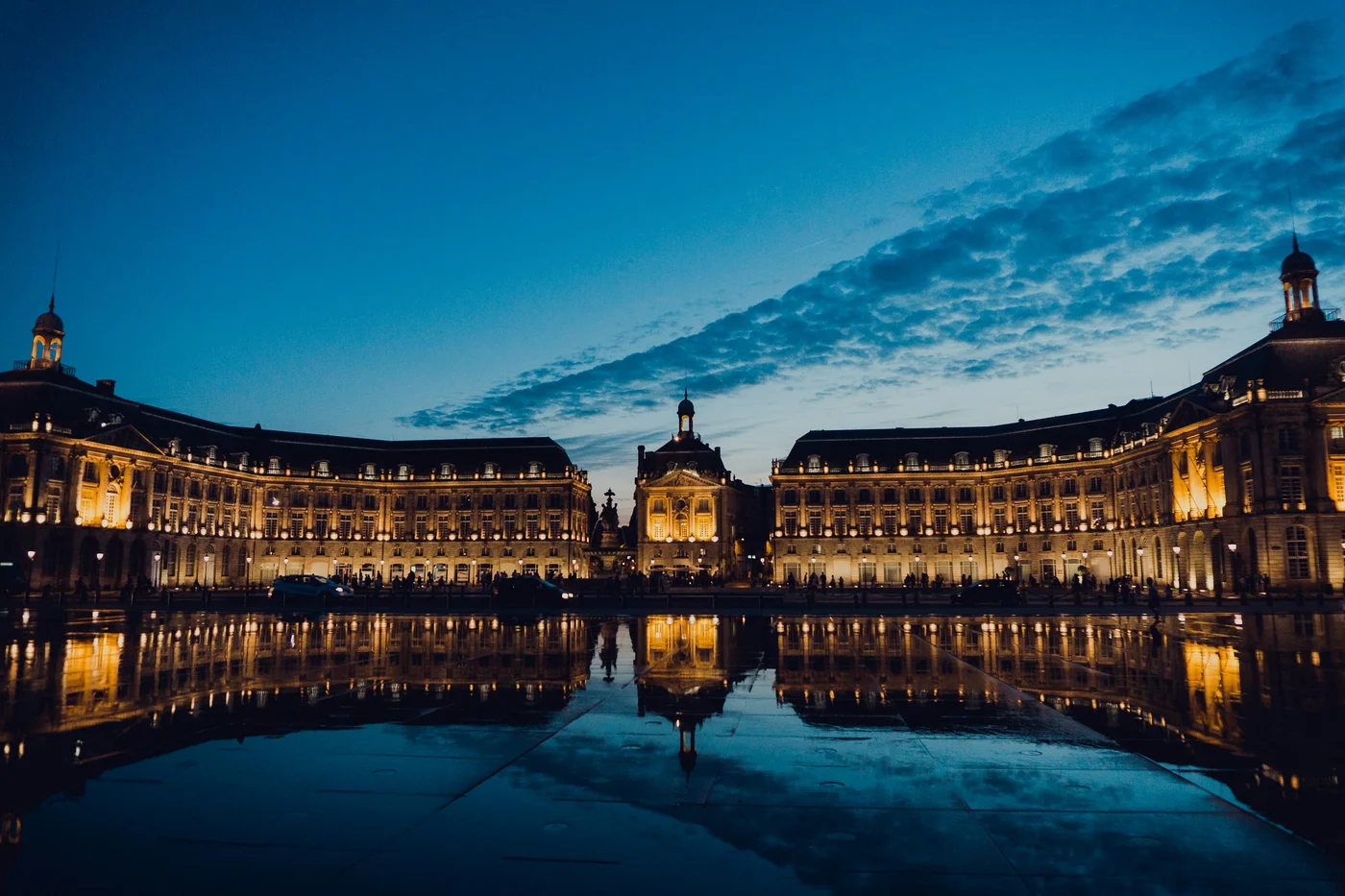
Bordeaux is the wine capital of the universe — the surrounding Médoc, Saint-Émilion, Pomerol, Sauternes, and Graves AOCs produce around 700 million bottles a year from 7,000 châteaux — and the city itself is one of France's most elegant rehab stories. Two decades of work cleared the soot off the honey-coloured 18th-century limestone facades and pedestrianised the riverfront, earning the entire Port of the Moon UNESCO World Heritage status. The Place de la Bourse and its reflecting Miroir d'eau (the world's largest — a 3,450 m² thin sheet of water that mirrors the classical buildings behind) is the most photographed spot. From there, walk down the curving Garonne to La Cité du Vin, a startling glass-and-aluminium swirl of a museum (it looks intentionally like a wine swirling in a glass) that does for wine what the Pompidou did for modern art — immersive, multi-sensory, and surprisingly fun, ending with a tasting overlooking the river. The medieval Saint-André Cathedral, the broad pedestrianised Rue Sainte-Catherine (one of the longest shopping streets in Europe at 1.2km), and the Chartrons district for antique-hunting and natural-wine bars complete the city itself. Day-trip to Saint-Émilion (UNESCO-listed medieval village in the middle of vineyards) or the Dune du Pilat on the coast.
 Editor's pick · Tiqets