First impressions of Dresden
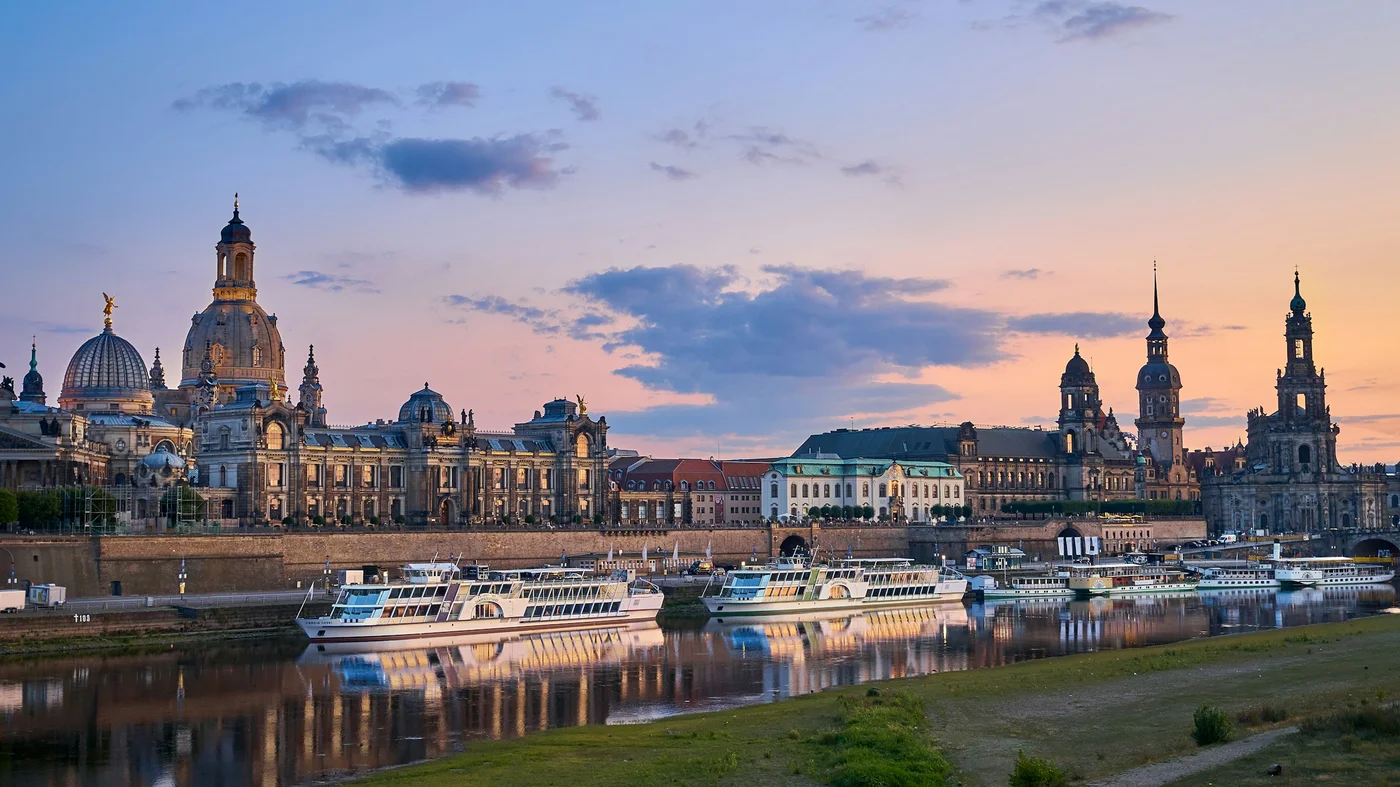
Dresden's story is one of catastrophic destruction followed by an extraordinary, decades-long reconstruction — the February 1945 firebombing flattened the historic centre and killed around 25,000 people overnight, leaving the iconic skyline as smouldering ruins. The city's symbol of resurrection is the Frauenkirche, the Baroque Protestant church whose blackened rubble was left as a war memorial for 45 years before being painstakingly rebuilt between 1994 and 2005 using 8,500 original stones (visible as darker patches in the new walls). Inside, the dramatic light-filled dome and Silbermann organ are unmissable. The Zwinger palace complex — a Baroque masterpiece of 18th-century Saxon court architecture — holds three superb museums: the Old Masters Picture Gallery (Raphael's Sistine Madonna), the Porcelain Collection (the second-largest in the world after Istanbul's), and the Mathematics-Physics Salon. The lavishly restored Royal Palace next door now contains the Green Vault, a treasure chamber of jewels and gold and ivory — the most opulent baroque treasury in Europe (the 2019 jewel heist was partly recovered in 2022). Cross the Elbe to the Neustadt, the boho district that survived bombing, for the alternative-art Kunsthofpassage and Dresden's young nightlife. The city is also the gateway to Saxon Switzerland National Park, a stunning area of sandstone rock formations 30km east.
 Editor's pick · Tiqets