About Venice
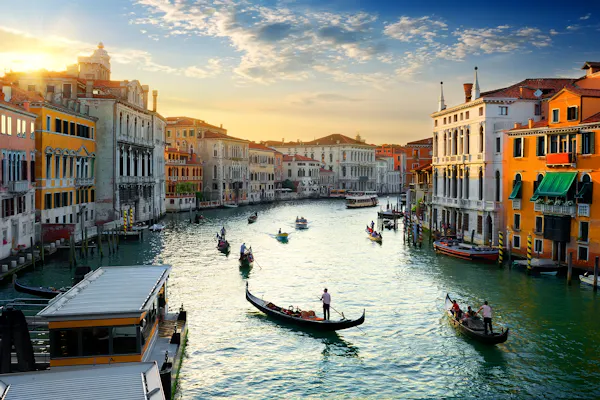
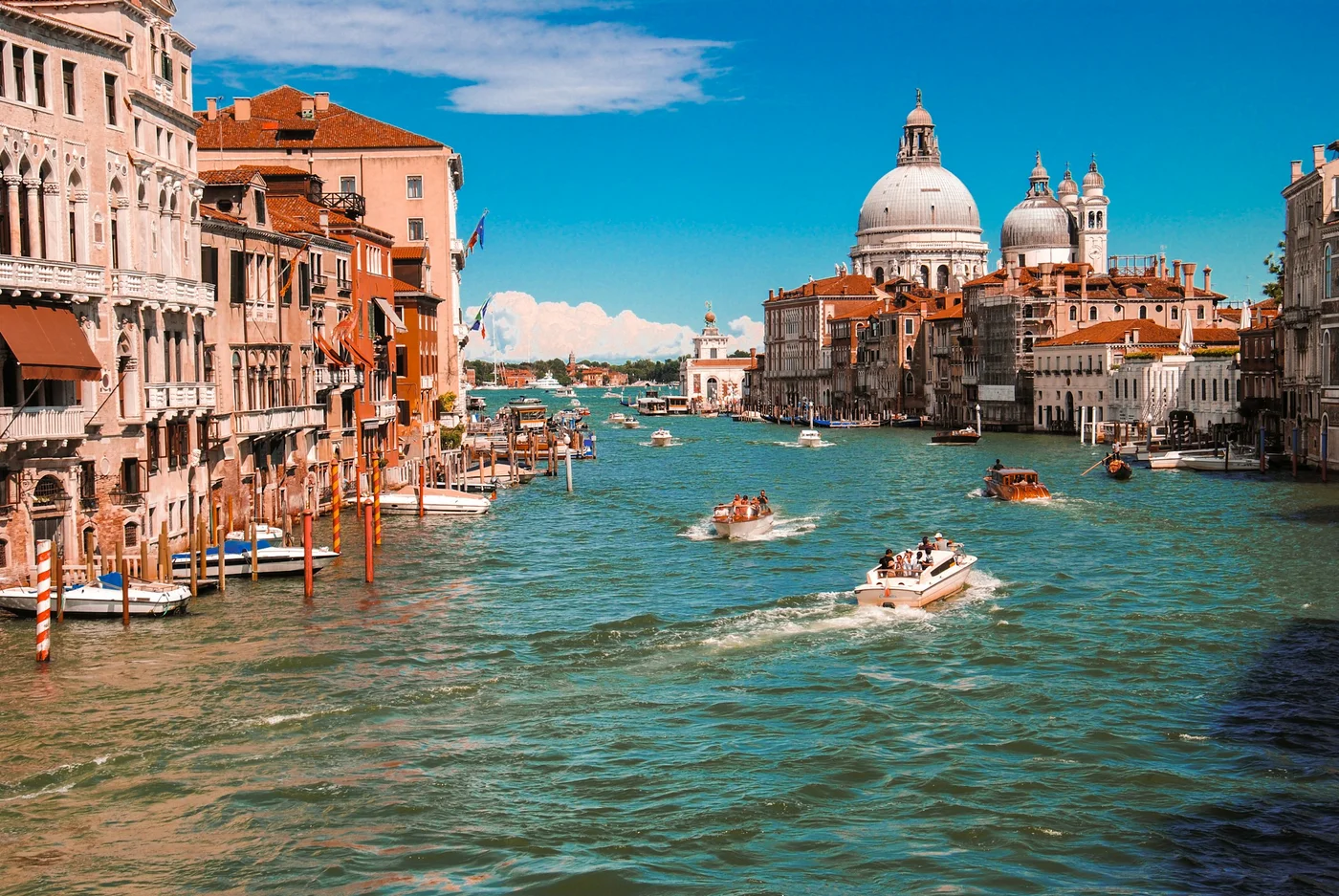
Venice is genuinely, physically impossible — a city of around 50,000 residents (down from 175,000 a century ago) built between the 5th and 18th centuries on 118 small islands in a saltwater lagoon, connected by 400 bridges and 177 canals, with no car traffic at all and the entire civic infrastructure floating on wooden piles driven into mud. The 1,000-year-old former republic is now a UNESCO World Heritage site under serious threat from climate change, mass tourism, and the slowly-sinking foundations. Start at Piazza San Marco — Napoleon's 'most elegant drawing room in Europe' — dominated by the gold-mosaic Byzantine Basilica di San Marco (founded 829, holding the relics of St Mark) and the soaring Campanile. The Doge's Palace next door, with its Bridge of Sighs over the canal to the old prisons, was the seat of Venetian republic power for 800 years. Wander the Cannaregio and Castello districts away from the crowds; cross the Rialto Bridge to see the produce and fish markets; lose yourself among the colourful houses on the island of Burano (45 minutes by vaporetto); and don't miss Tintoretto's vast cycle at the Scuola Grande di San Rocco. Carnival in February is iconic; the Biennale (every odd year) defines contemporary art.
 Editor's pick · Tiqets