First impressions of Vilnius
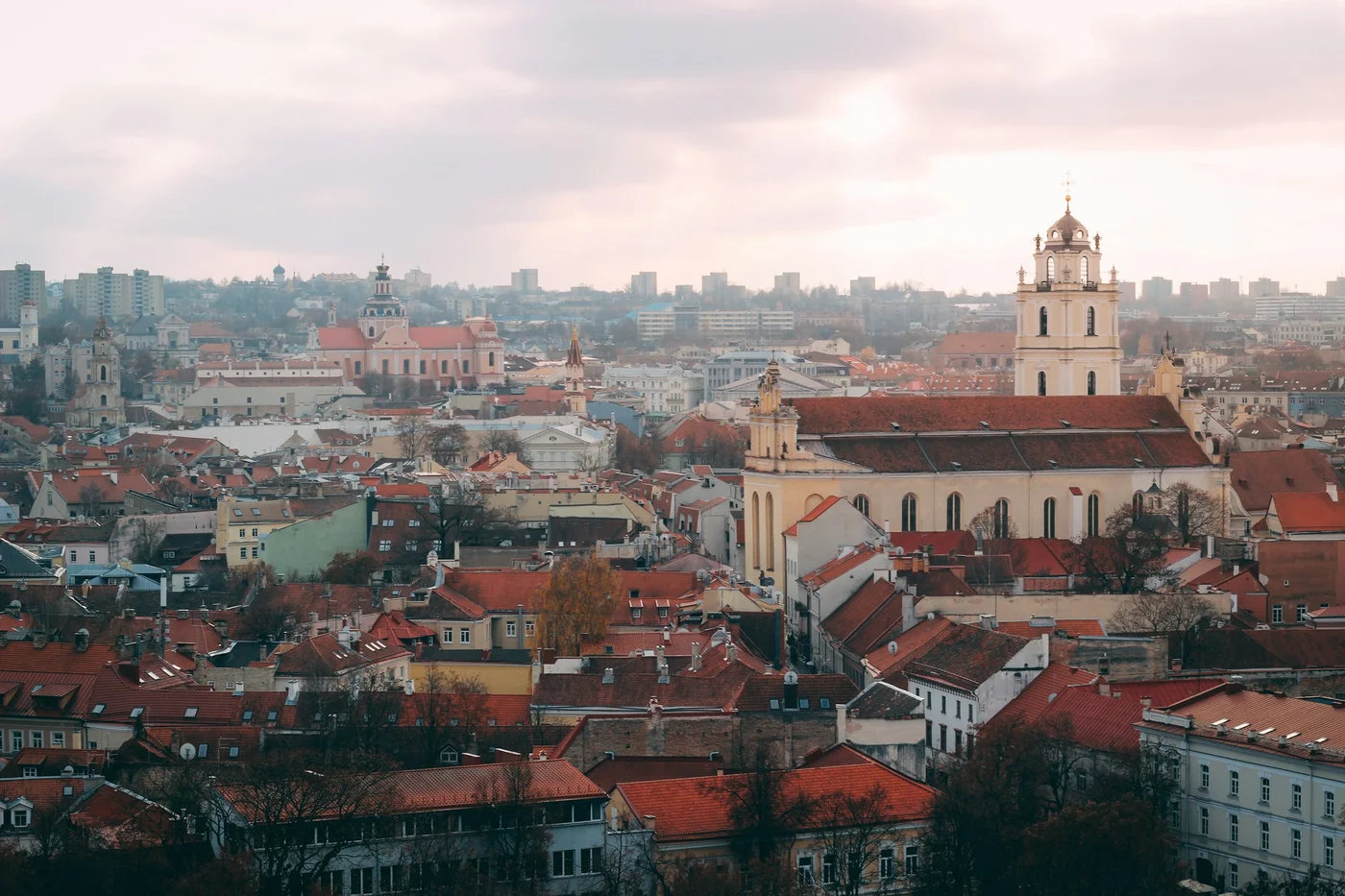
Vilnius is the unsung great Baltic capital — a UNESCO-listed Old Town that's the largest surviving medieval centre in Northern Europe (around 360 hectares of cobbled lanes, baroque churches, courtyards, and merchant houses), set in a wide green valley where the Neris and Vilnia rivers meet, with a hilltop castle and one of Europe's most photographed quirky republics. The compact pedestrianised core revolves around Cathedral Square (with the white neoclassical Cathedral and the leaning 57m bell tower) and runs south along Pilies and Didžioji streets to the Town Hall and the Gates of Dawn, a 16th-century city gate with its famous chapel housing a miraculous image of the Black Madonna. Climb Gediminas Hill for the panorama. Don't miss the bohemian, semi-autonomous Republic of Užupis — a tiny artists' quarter that declared independence on April Fools' Day 1997, complete with its own president, flag, 12-article constitution carved on glass plaques (in 41 languages), and an angel statue at the entrance. The moving Holocaust Museum and the haunting KGB Museum tell the brutal 20th-century story of what was once the 'Jerusalem of the North' (60% of pre-war Vilnius was Jewish; 90% perished). Modern Vilnius is also one of Europe's most affordable design and food destinations — try the new restaurants in Užupis and the regenerated Naujamiestis district.
 Editor's pick · Tiqets