Malta
Explore Mdina
Your quick guide to a stay in Mdina
- Population
- 300
- Main airport
- MLA
- Best time to visit
- March to May, September to November
- Climate
- Summer 29°C · Winter 14°C
Why visit Mdina
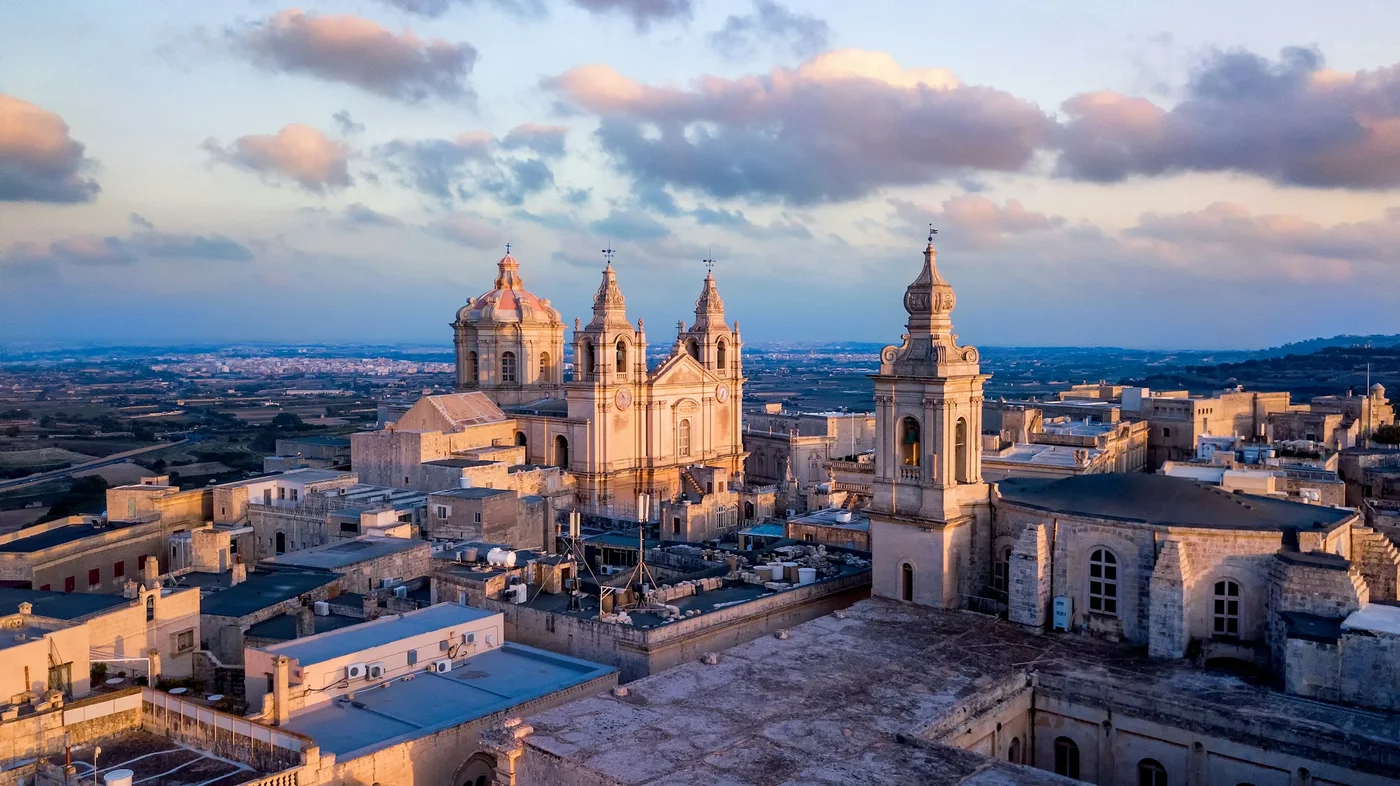
Mdina is the 'Silent City' — Malta's medieval walled hilltop capital from antiquity until the Knights of St John moved to Valletta in 1571. Sitting on a plateau in the centre of the island, 200 metres above sea level with panoramic views to the coast, it has been continuously inhabited for over 4,000 years and is one of Europe's finest surviving small walled cities. Only about 290 people still live within the ramparts (most are descendants of Maltese noble families with the right of residence), and the strict overnight peace gives the city its 'silent' nickname — walk the lanes after dusk and you'll hear your own footsteps echoing. The astonishingly ornate Mdina Cathedral is the spiritual heart, built between 1697 and 1702 by the Maltese baroque master Lorenzo Gafà on the spot where Saint Paul reputedly converted Roman governor Publius to Christianity after his shipwreck on Malta in AD 60. Don't miss Palazzo Falson (one of the best-preserved private medieval mansions in the country, now a fine museum), the wonderful baroque Vilhena Palace, and the Mdina Dungeons. Just outside the walls, the adjacent Rabat district holds the moving St Paul's Catacombs — 4th-century Christian and Jewish underground burial chambers, the largest in Malta.
Travel tips for Mdina
When is the best time to visit Mdina?
Do I need a visa to visit Mdina?
It depends on your nationality. Run a quick check to see whether you need a Schengen visa, ETIAS, or can travel visa-free into Malta.
How do I get to Mdina?
How do I get around Mdina?
Keep exploring Malta
Plan the rest of your Mdina trip
Schengen day calculator
Plan around the 90 days in any 180 rule — see how long you can stay and when you can re-enter.
Travel insurance for Malta
Medical, cancellation and baggage cover compared — what to look for before you book.