Why visit Bratislava
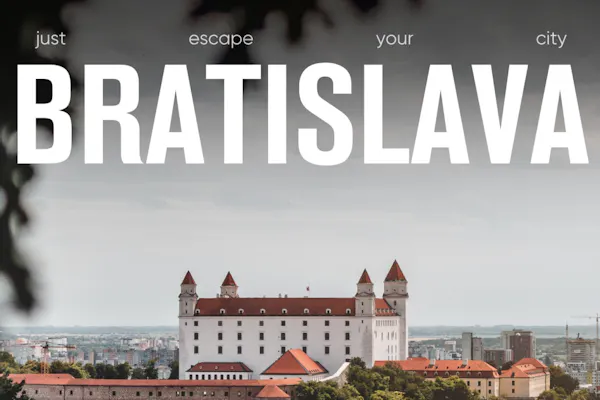
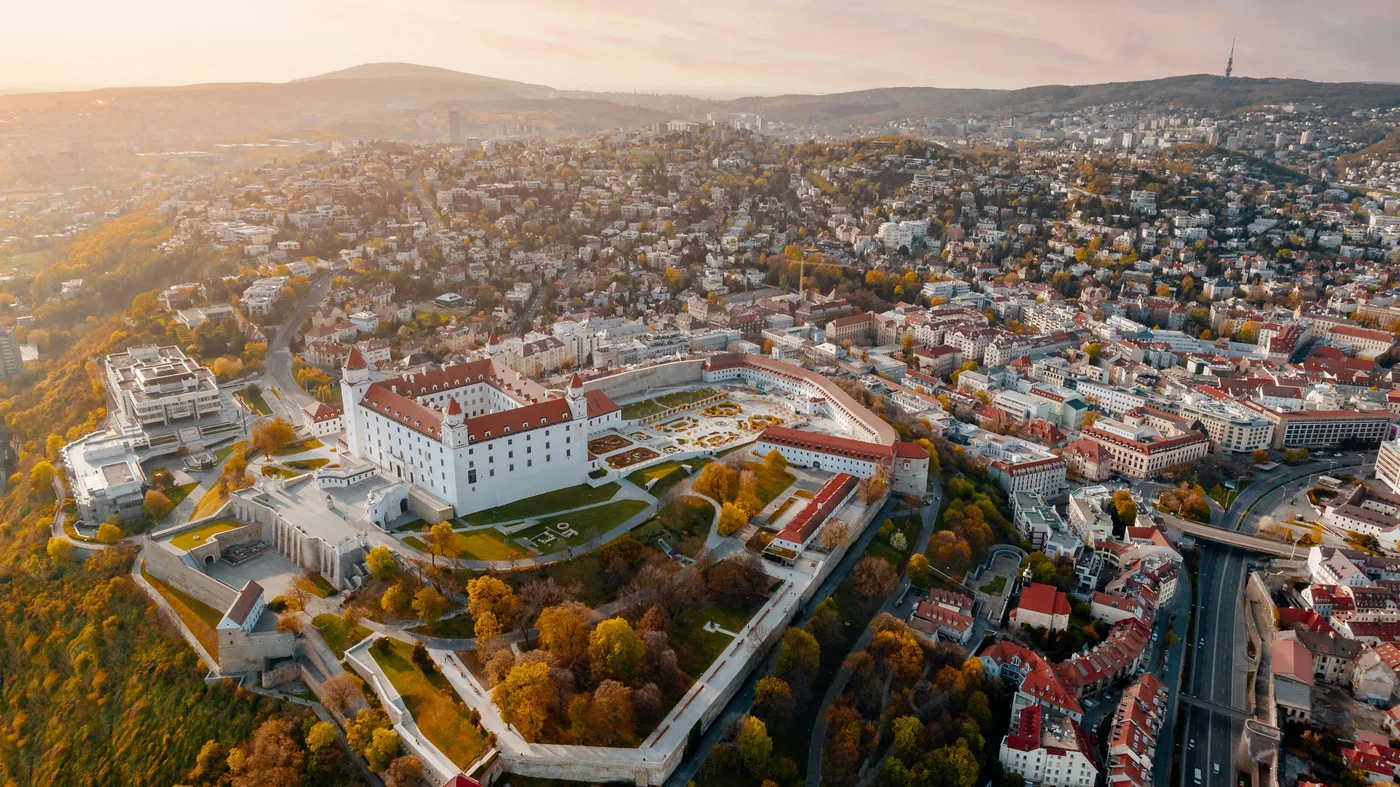
Bratislava is one of the smallest and most underrated capital cities in Europe — a compact, walkable Old Town on the north bank of the Danube, with a curious geography that puts the Austrian and Hungarian borders within sight of the centre (you can cycle to both within an hour). The hilltop Bratislava Castle, with its distinctive white walls and four red corner towers (rebuilt after a 1811 fire), is the city's iconic silhouette and houses the Slovak National Museum; the panorama from the castle terrace takes in the Danube, the modern UFO observation deck on the futuristic SNP Bridge, and the Petržalka housing district on the far bank (Central Europe's largest concrete-panel housing estate, built in the 1970s-80s, home to 100,000 people). The compact Old Town below is one of the most rewarding in Central Europe — the pedestrianised Hlavné námestie (Main Square) with the Renaissance Old Town Hall, the dramatic Gothic St Martin's Cathedral (where 11 Hungarian kings were crowned between 1563 and 1830), and the curious bronze 'Man at Work' (Čumíl) statue peeking out of a manhole. Don't miss the lively Slavin WWII memorial on a panoramic hill above town, the brilliantly modernist new Slovak National Gallery, and a long lazy afternoon eating Slovak cuisine (bryndzové halšky — the national dish of potato dumplings with sheep cheese and bacon) in a small Old Town restaurant.
 Editor's pick · Tiqets