A taste of Lucerne
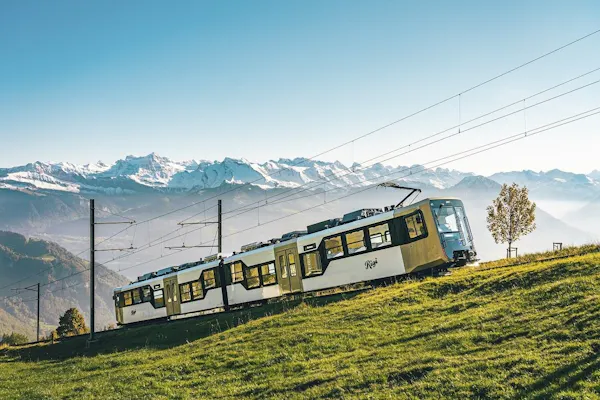
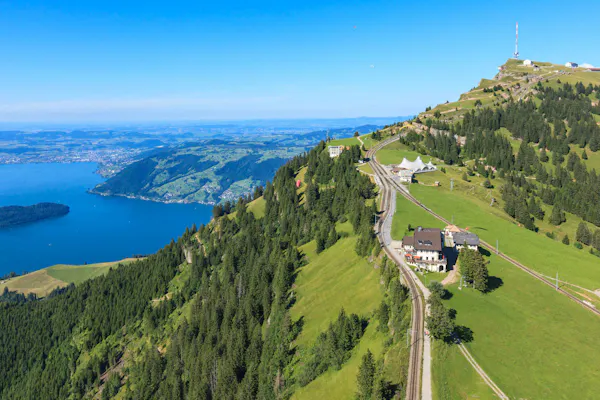
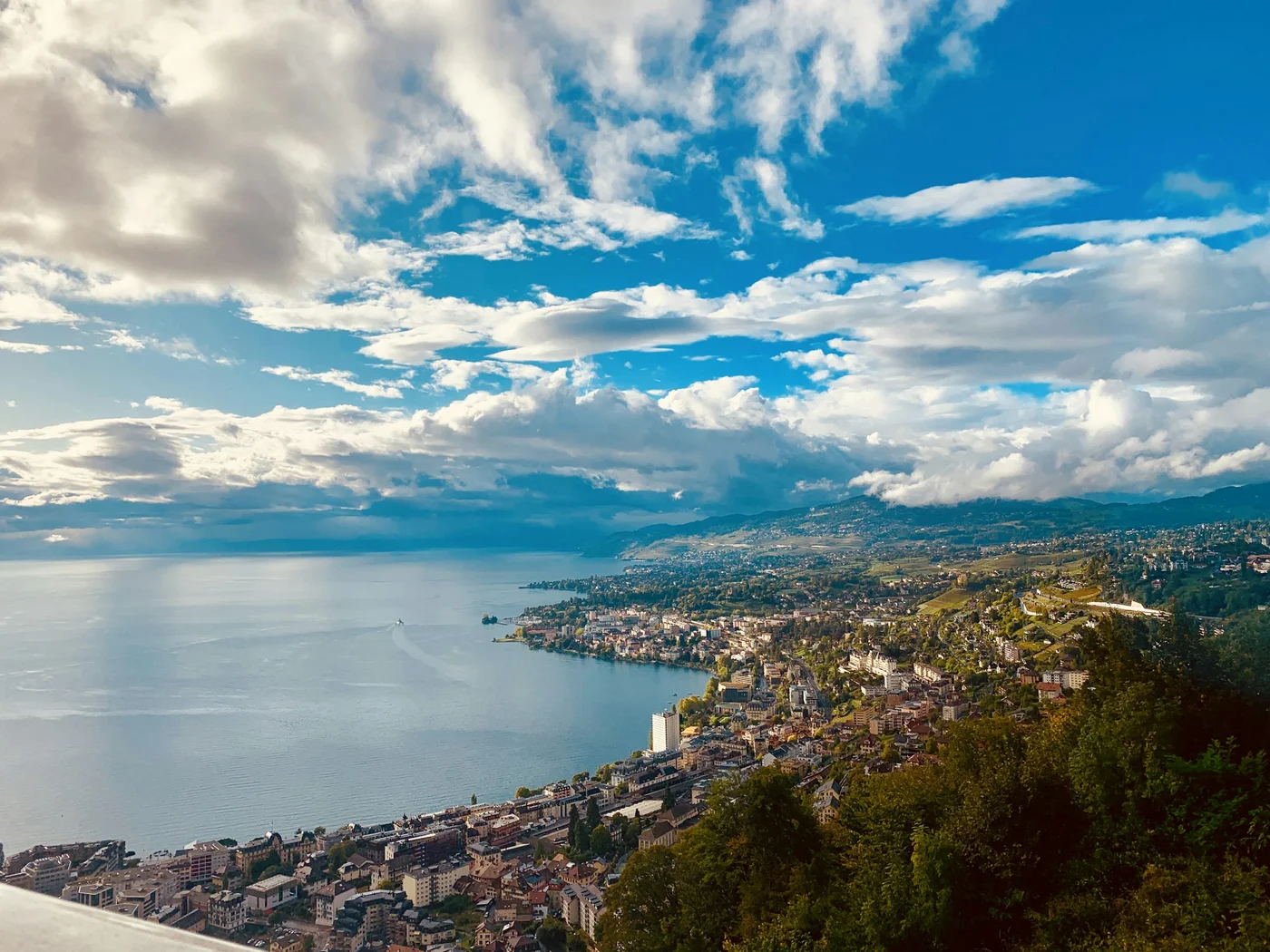
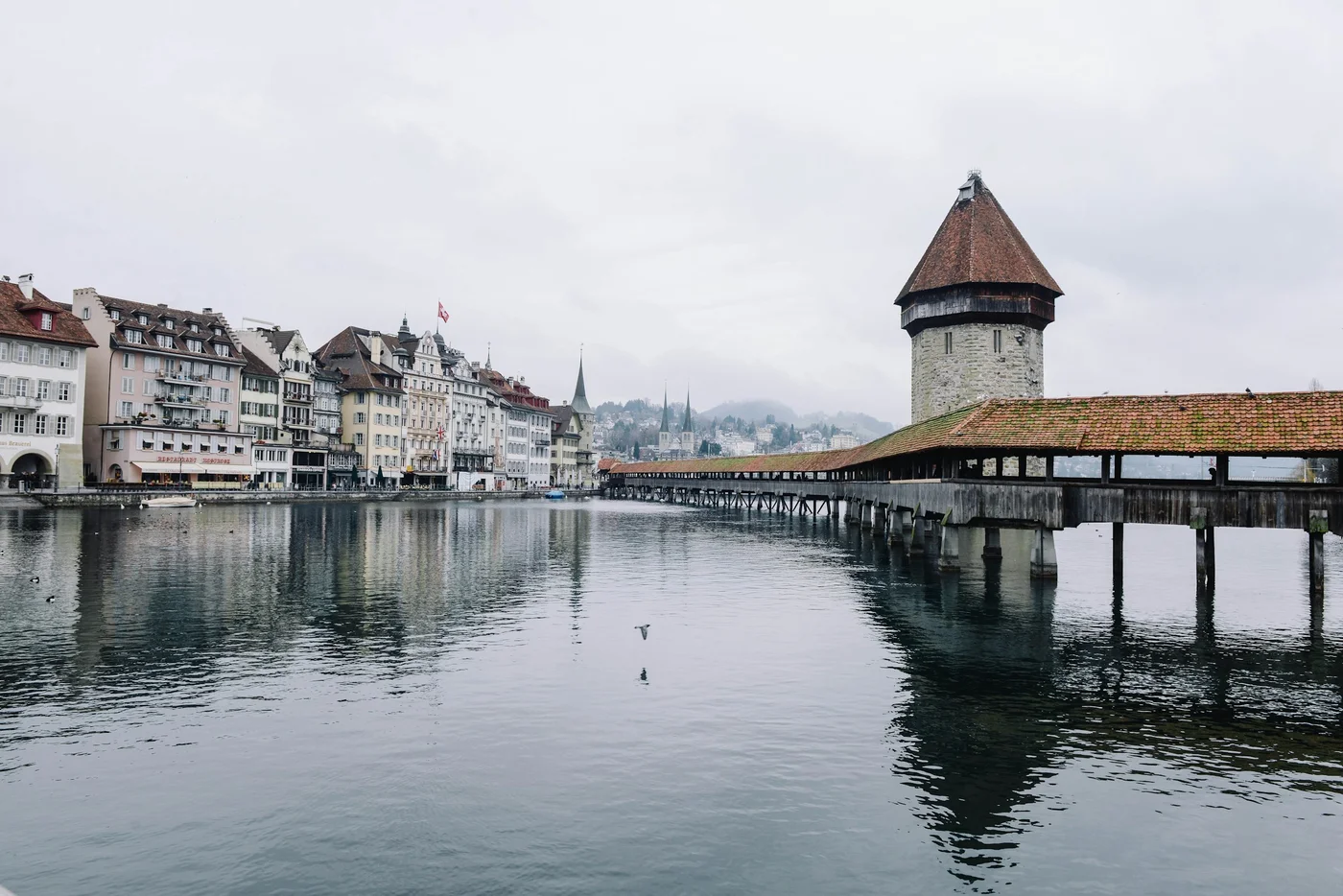
Lucerne (Luzern) is the most postcard-perfect city in Switzerland — a small medieval town of about 82,000 people, set on the northwest tip of Lake Lucerne (Vierwaldstättersee, one of the prettiest in the country), with the snow-capped Alps rising dramatically to the south and the famous Chapel Bridge (Kapellbrücke) spanning the Reuss river. The Kapellbrücke (built 1333, partially burned in 1993 and rebuilt) is the oldest covered wooden bridge in Europe; its interior contains 17th-century triangular ceiling paintings showing scenes from Lucerne and Swiss history (about a third are surviving originals). The compact Old Town on the right bank revolves around the dramatically painted Hofkirche (the city's twin-towered Renaissance basilica) and the cobbled Weinmarkt and Hirschenplatz squares, lined with frescoed merchant houses. Just behind, the surviving section of the 9-tower medieval Musegg Wall (Museggmauer) gives the best panorama. The genuinely moving Lion Monument (Löwendenkmal) — a 10m sleeping lion carved into a cliff face in 1820-21 by Danish sculptor Thorvaldsen, in memory of the 700 Swiss Guards killed defending Louis XVI during the 1792 French Revolution — was famously called by Mark Twain 'the most mournful and moving piece of stone in the world'. Don't miss the brilliant Swiss Transport Museum, a lake boat trip up to the dramatic Mt Pilatus (with the world's steepest cog railway, 48% gradient) or Mt Rigi (the original Alpine tourist mountain), and the spectacular cable car up to the snow-topped Mt Titlis with the world's first revolving cable car.
 Editor's pick · Tiqets