Bulgaria
Explore Plovdiv
Highlights, attractions and travel tips Plovdiv
- Population
- 345,000
- Main airport
- PDV
- Best time to visit
- May to September
- Climate
- Summer 28°C · Winter 2°C
First impressions of Plovdiv
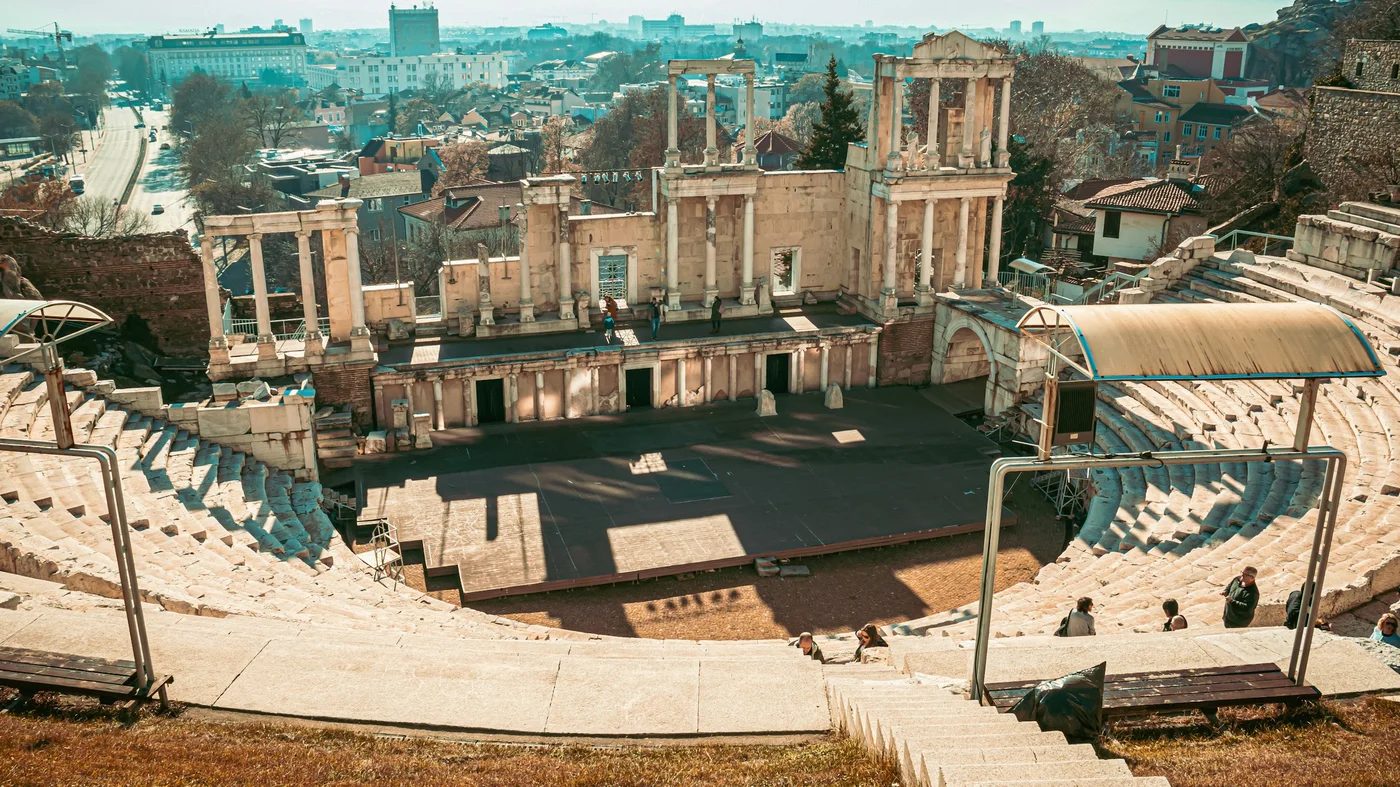
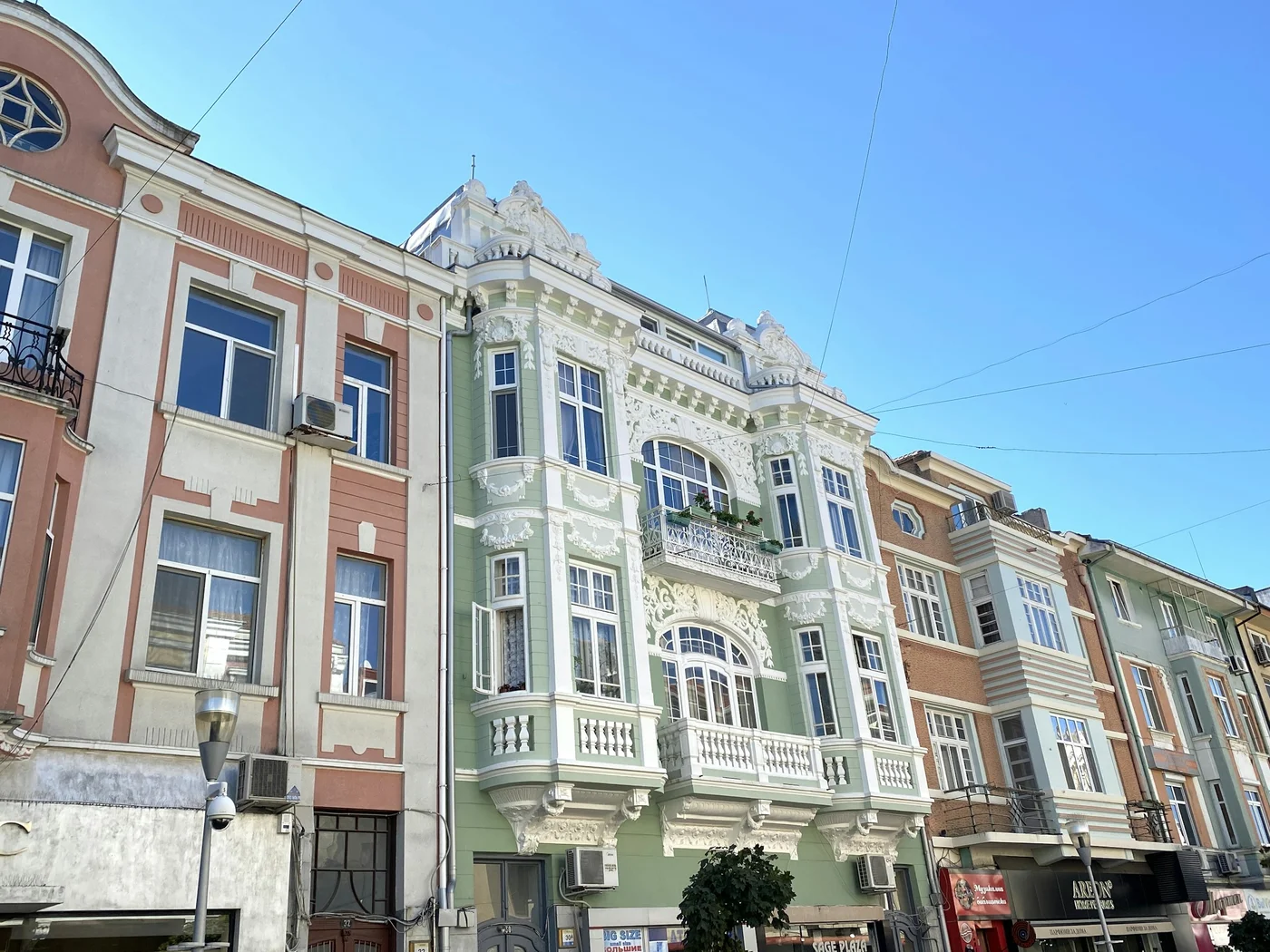
Plovdiv quietly claims to be the oldest continuously inhabited city in Europe — archaeology backs it up, with traces of settlement going back over 8,000 years, predating Rome, Athens, and Carthage. The city is built across seven syenite hills (six of which still stand) above the Maritsa River, and the layered history is best seen at the 2nd-century Roman Theatre of Philippopolis on Nebet Tepe — still used for opera and concerts under the open sky, with seating for 7,000 and views over the city. From there, wander down into the Old Town's cobbled lanes lined with the colourful, top-heavy National Revival houses (19th-century merchant homes whose carved ceilings and trompe-l'œil facades are now museums), through the Roman Stadium and Forum unearthed beneath the modern main shopping street, and into the Kapana ('the Trap') neighbourhood — once a tangle of artisan workshops, now Plovdiv's creative quarter of galleries, craft beer bars, and independent boutiques. The city held the European Capital of Culture title in 2019; the legacy of that year still hums through its public art and festivals.
Planning to visit Plovdiv
When is the best time to visit Plovdiv?
Do I need a visa to visit Plovdiv?
It depends on your nationality. Run a quick check to see whether you need a Schengen visa, ETIAS, or can travel visa-free into Bulgaria.
How do I get to Plovdiv?
How do I get around Plovdiv?
Keep exploring Bulgaria
Plan the rest of your Plovdiv trip
Schengen day calculator
Plan around the 90 days in any 180 rule — see how long you can stay and when you can re-enter.
Travel insurance for Bulgaria
Medical, cancellation and baggage cover compared — what to look for before you book.