Croatia
Discover Krka
Highlights, attractions and travel tips Krka
- Population
- 100
- Main airport
- ZAD
- Best time to visit
- May to October (no swimming in waterfalls allowed since 2021)
- Climate
- Summer 29°C · Winter 8°C
First impressions of Krka
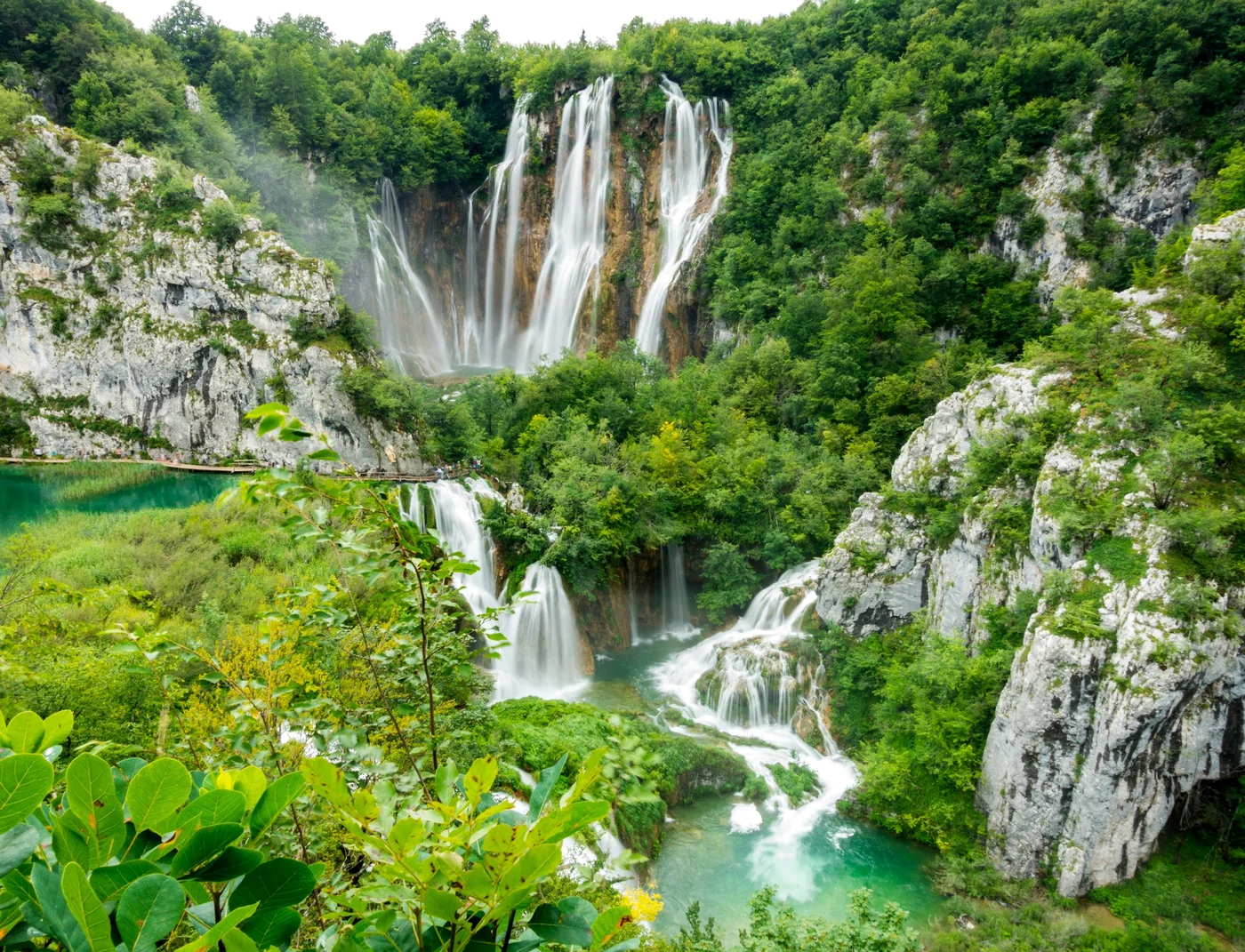
Krka National Park is the sun-drenched, citrus-and-olive-tree counterpart to Plitvice's alpine drama. The park's set piece is Skradinski Buk, a 400-metre run of 17 stepped travertine waterfalls cascading into a wide pool framed by reed beds and stone houses — the most photographed spot in the park (until 2021 you could swim in it; that's now prohibited to protect the fragile travertine, but the view is undiminished). Boardwalks loop around the falls through alder forest, and a network of restored watermills, fulling mills, and a small 19th-century hydroelectric station (one of the first AC plants in the world, switched on in 1895, two days after Niagara) tells the story of the river as a working landscape. The peaceful Roski Slap waterfall further upstream is another highlight, and a boat ride from there reaches the 14th-century Krka Monastery hidden in a lush canyon. Don't miss the medieval island town of Visovac, an Orthodox monastery floating in the middle of the river, accessible by park boat. Enter via Skradin (river boat into the park) or Lozovac (bus down).
Travel tips for Krka
When is the best time to visit Krka?
Do I need a visa to visit Krka?
It depends on your nationality. Run a quick check to see whether you need a Schengen visa, ETIAS, or can travel visa-free into Croatia.
How do I get to Krka?
How do I get around Krka?
Keep exploring Croatia
Plan the rest of your Krka trip
Schengen day calculator
Plan around the 90 days in any 180 rule — see how long you can stay and when you can re-enter.
Travel insurance for Croatia
Medical, cancellation and baggage cover compared — what to look for before you book.