A taste of Zagreb
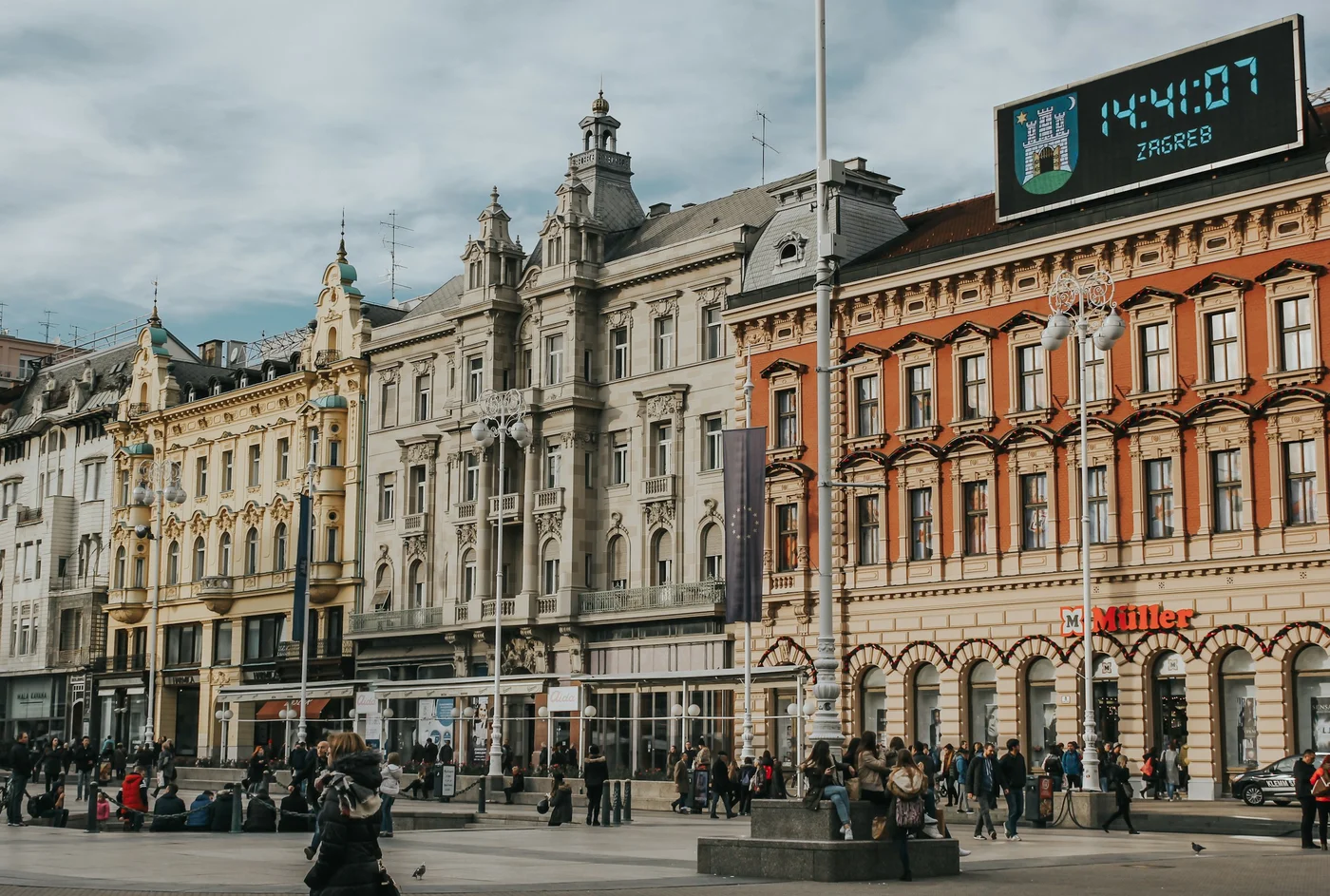
Zagreb is one of the great underrated capitals of Central Europe — a city that wears its Austro-Hungarian inheritance and Yugoslav memory as comfortably as its current role as Croatia's confident, modern hub. The city splits in two: the medieval Gornji Grad (Upper Town) on the hill, reached by the world's shortest funicular (66 metres, in operation since 1890), with the colourful tiled roof of St Mark's Church (1880), the open-air cafes of Tkalčićeva, and the candle-lit Stone Gate shrine; and the 19th-century Donji Grad (Lower Town) below, laid out in a horseshoe of green parks called Lenuci's Horseshoe and lined with grand Austro-Hungarian institutions. Don't miss Ban Jelačić Square, the Cathedral with its twin spires (one still under restoration after the 2020 earthquake), and Zagreb's clutch of intimate, quirky museums: the genuinely moving Museum of Broken Relationships, the Museum of Illusions (which started here), and the Mimara. December turns the whole city into one of Europe's best Christmas markets — it's won the title three years running.
 Editor's pick · Tiqets