First impressions of Delphi
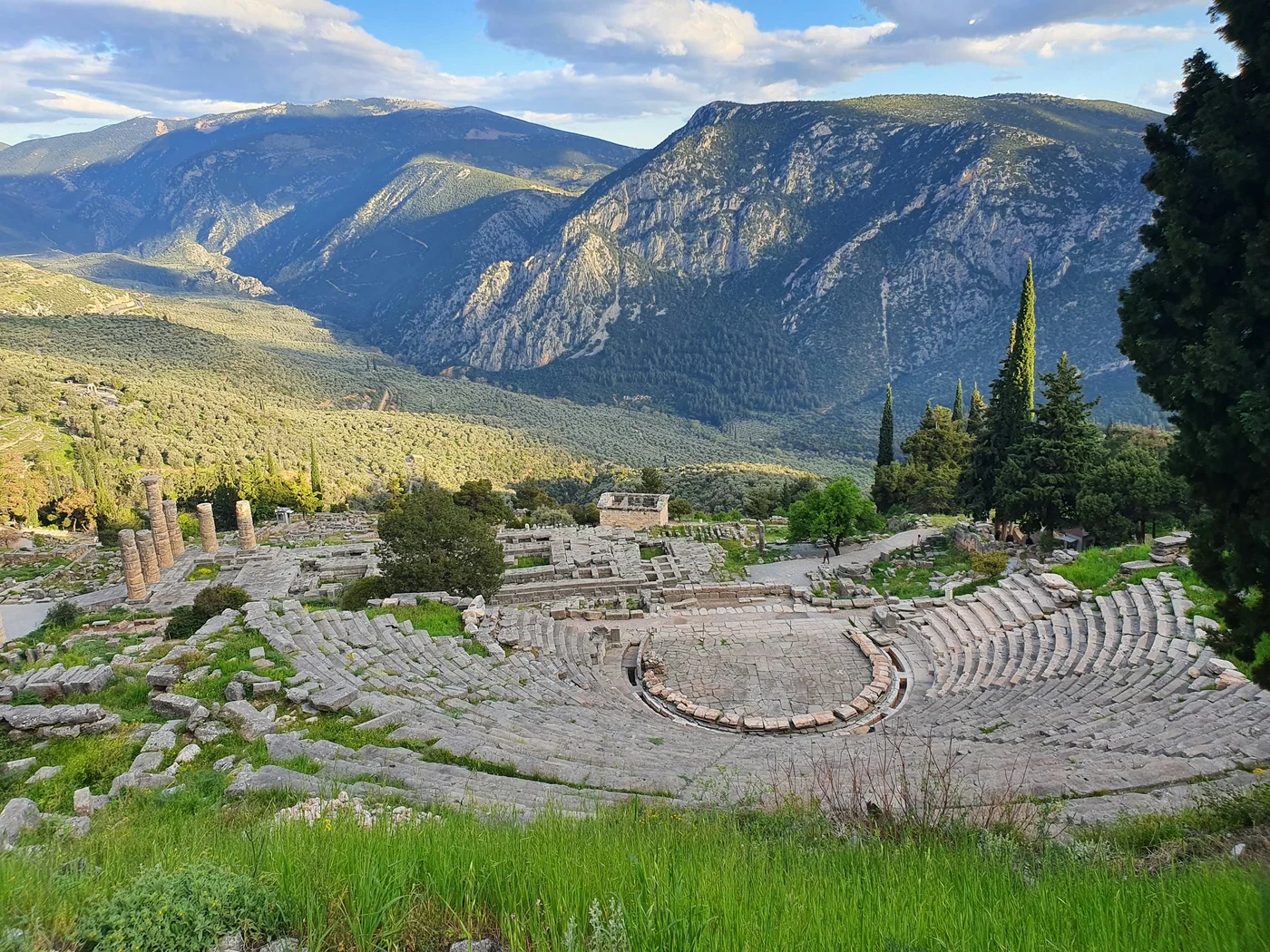
Delphi is one of the most evocative archaeological sites in Greece — a Sacred Way of marble ruins climbing the steep, pine-and-cypress-clad slopes of Mount Parnassus, with the deep Pleistos valley falling away below and the Gulf of Corinth shimmering on a clear day. From the 8th century BC onwards, this was the spiritual centre of the Greek world: kings and city-states from across the Mediterranean sent emissaries to consult the Pythia, a priestess who, seated on a tripod over a vapour-filled chasm in the Temple of Apollo, delivered cryptic prophecies that could decide wars, founding of colonies, and dynastic successions. Climb the Sacred Way past the carefully reconstructed Athenian Treasury, the Temple of Apollo (you can still make out the steps where the Pythia descended), the magnificent 4th-century theatre, and right to the top, the stadium where the Pythian Games were held every four years from 582 BC. The Delphi Archaeological Museum at the entrance is genuinely outstanding — the 5th-century BC bronze Charioteer of Delphi, with his eerily preserved enamel eyes, is one of the most beautiful surviving bronzes from antiquity. The Tholos of Athena Pronaia, slightly downhill, is the most photographed monument here.
 Editor's pick · Tiqets