First impressions of Athens
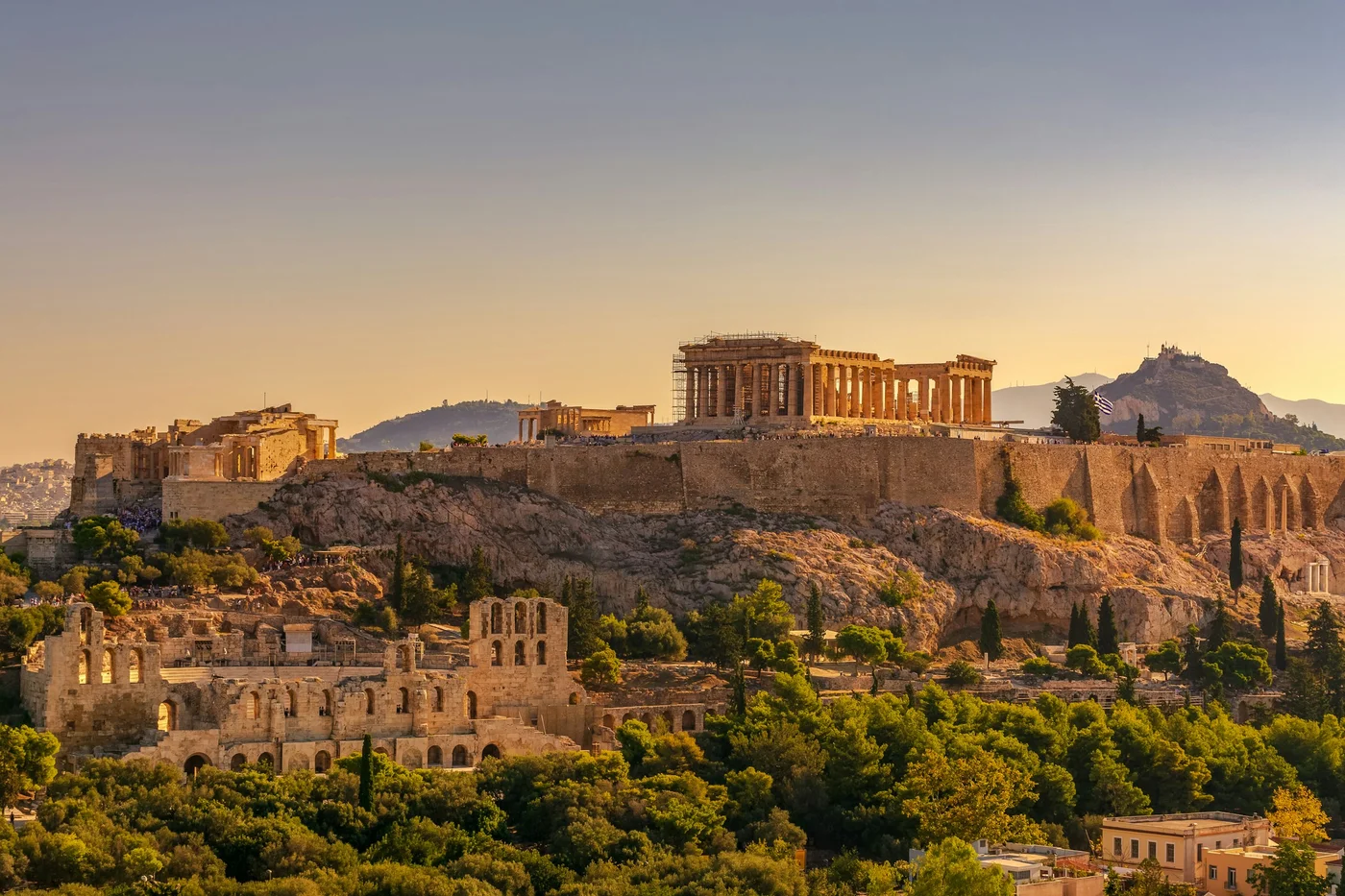
Athens is where Western civilisation got its first practical run — the city's central rocky outcrop, the Acropolis, holds the Parthenon (447–432 BC), one of the most influential buildings in human history and the masterpiece of the architect Iktinos and sculptor Pheidias. From its weathered marble columns you look across to Mount Lycabettus and out to the Aegean, with the modern city spread below. The brilliant Acropolis Museum at its foot houses the original sculptures, including most of the surviving Parthenon frieze (the rest, infamously, still in the British Museum). Wander downhill through the Plaka and Anafiotika neighbourhoods — a Cycladic-village pocket tucked into the city, all narrow lanes and blue shutters — to the Ancient Agora where Socrates argued with anyone who would listen, and on to Monastiraki Square for the flea market and the post-Ottoman Tzistarakis Mosque. Modern Athens has serious teeth too: the National Archaeological Museum is one of the world's great collections, the Stavros Niarchos cultural complex by Renzo Piano sits on the south coast, and the Koukaki and Pangrati districts have become the city's most interesting eating quarters. Aegean ferries leave from Piraeus port for the islands; the metro takes 30 minutes.
 Editor's pick · Tiqets