Greece
Visit Santorini
Highlights, attractions and travel tips Santorini
- Population
- 16,000
- Main airport
- JTR
- Best time to visit
- April to October
- Climate
- Summer 28°C · Winter 12°C
First impressions of Santorini
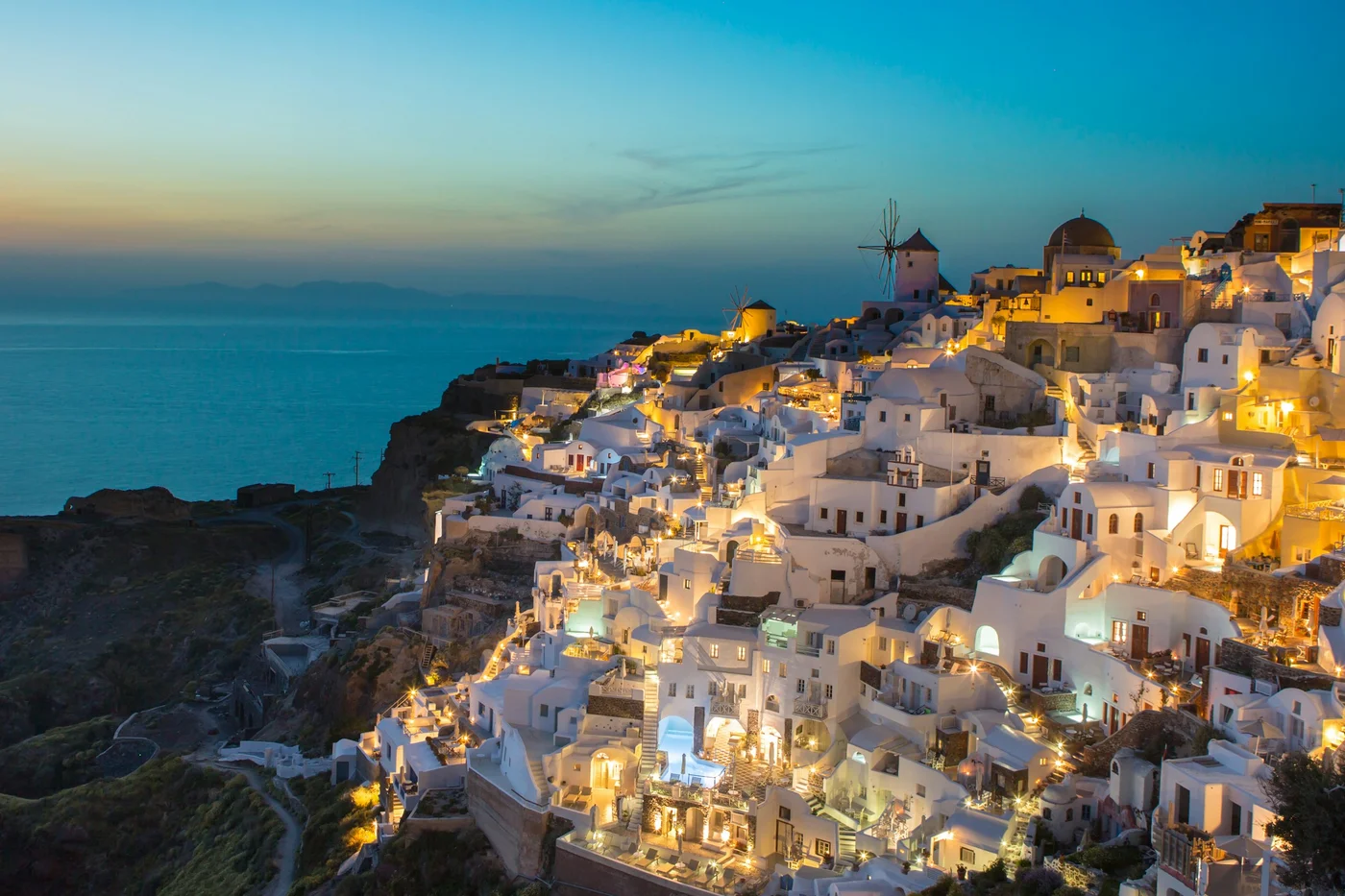
Santorini is the most dramatic Aegean island silhouette, a sun-bleached crescent of white-cube villages clinging to the rim of an enormous submerged volcanic caldera — the relic of the 'Minoan eruption' around 1600 BC, one of the largest volcanic events in human history (some scholars argue it spawned the Atlantis legend). The famous postcard view of blue-domed Orthodox churches against the deep blue Aegean is from Oia, the village at the northern tip, packed shoulder-to-shoulder at sunset (an experience that's either magical or maddening depending on the crowd that day). The capital, Fira, perches on the cliff 300m above the old port, with a 588-step donkey path or the new cable car connecting the two. The Akrotiri archaeological site at the south end is the unmissable historical visit: a Minoan town buried in volcanic ash like Pompeii and remarkably preserved, with two- and three-storey houses and frescoes still in situ (the most famous are in the Athens Archaeological Museum). The black-sand beaches of Perissa and Kamari and the red beach near Akrotiri are the best swimming spots; the local Assyrtiko white wine, grown in basket-trained vines on volcanic soils, is increasingly serious internationally.
Travel tips for Santorini
When is the best time to visit Santorini?
Do I need a visa to visit Santorini?
It depends on your nationality. Run a quick check to see whether you need a Schengen visa, ETIAS, or can travel visa-free into Greece.
How do I get to Santorini?
How do I get around Santorini?
Keep exploring Greece
Plan the rest of your Santorini trip
Schengen day calculator
Plan around the 90 days in any 180 rule — see how long you can stay and when you can re-enter.
Travel insurance for Greece
Medical, cancellation and baggage cover compared — what to look for before you book.